
Fish Hydrolysate: The Powerhouse Biostimulant for Healthy Plants
We are big fans of biostimulants, especially fish hydrolysates. But what exactly is fish hydrolysate, and why is it considered a powerhouse biostimulant?


At Fert Finda we have always been fans of testing soil and herbage testing. When starting out with a nutrient plan, getting a complete picture is critically important to the decisions you make when choosing what fertilisers and biostimulants you need on the farm or orchard. Those first tests, at the start of a new program, provide a benchmark, a place to refer back to with future tests.
Most farmers and growers know of the Soil Nutrient test, the one that measures NPKS and other nutrients in the soil as well soil PH, Olsen P etc. These are typically carried out by Hills Laboratories or Eurofins for example. What is less well known is the importance of and availability of Soil Biology testing.
With the increasing interest and understanding of soil biology many farmers and growers are wanting to know more about these tests and how they, along with herbage testing, create a far more complete picture than one single test in isolation.
Below we have outlined what we are calling “The Triumvirate of Testing”, the three essential tests that help you come up with a more complete nutrient application solution.
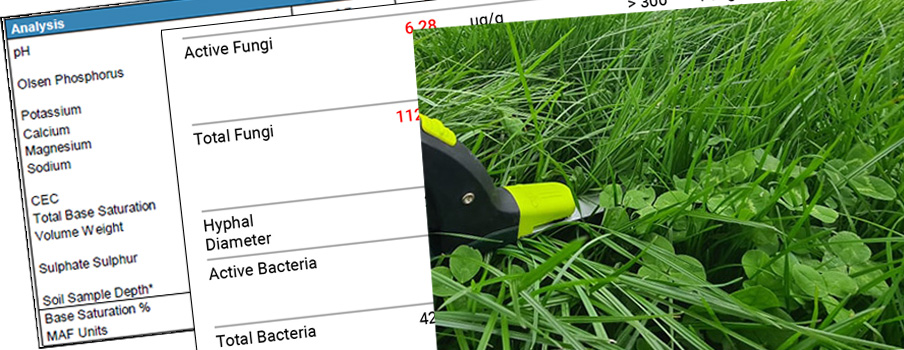
Most farmers and growers will be familiar with these types of tests. As mentioned above they typically come from the likes of Hills Laboratories or Eurofins and offer a complete picture of the nutrients measured in the soil, along with things like Soil PH and Olsen P. These tests have typically been used by farmers and growers to determine what nutrient products they put onto their soil in any given season.

Soil nutrient testing aims to determine the levels of essential nutrients in the soil to ensure that pastures, crops and plants are productive and can support healthy production.
1. Macronutrients:
– Nitrogen (N): Crucial for plant growth and forage quality.
– Phosphorus (P): Important for root development and energy transfer.
– Potassium (K): Helps in water regulation and disease resistance.
2. Secondary Nutrients:
– Calcium (Ca): Important for soil structure and plant cell wall strength.
– Magnesium (Mg): Vital for photosynthesis.
– Sulfur (S): Necessary for protein synthesis.
3. Micronutrients:
– Elements like Iron (Fe), Manganese (Mn), Zinc (Zn), Copper (Cu), Boron (B), and Molybdenum (Mo).
1. Soil Sampling:
– Collecting soil samples from different areas of the paddock at a min 7.5cm depth.
– Samples should be representative of the entire area to get accurate results.
2. Laboratory Analysis:
– Samples are sent to a lab where they are analyzed using methods like spectrometry, chromatography, and titration.
3. Soil pH:
– Measuring soil acidity or alkalinity, which affects nutrient availability and microbial activity.
The information obtained from these soil tests has historically been used to determine the levels of nutrients needed to be applied to maintain optimal levels of production. However, increasingly farmers and growers are having to respond to regulations due the degradation of environmental outcomes and the like. This has led to an increase in the interest, and the necessity of, Soil Biology Testing.
Soil biology testing evaluates the living organisms in the soil, including bacteria, fungi, protozoa, etc, all of which play a critical role in nutrient cycling, organic matter decomposition, and soil structure maintenance. All these microorganisms and biological matter form a symbiotic ecosystem where plants, biology, nutrients, humus, organic matter all combine and work together for the benefit of each other. However, maintaining a balance for your crop in all of these is the important factor when considering soil health.
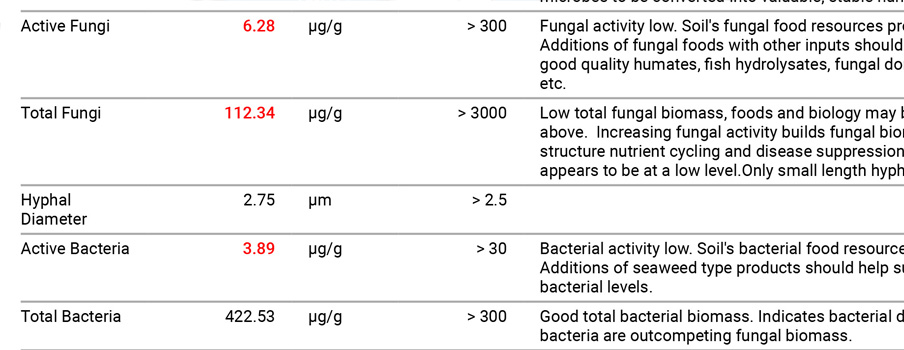
As our understanding of the impact of soil biology has grown so has the importance of measuring the levels of different types of biology and how active they are in the soil.
1. Microbial Biomass:
– The total mass of microorganisms in the soil, indicating the overall health of soil biology.
2. Soil Respiration:
– Measurement of CO₂ production by soil organisms, reflecting microbial activity and organic matter decomposition rates.
3. Soil Enzyme Activity:
– Enzymes like dehydrogenase, phosphatase, and urease, which are involved in nutrient cycling.
4. Microbial Diversity:
– Diversity of microbial species, which ensures resilience and efficient functioning of the soil ecosystem.
1. Direct Counts:
– Microscopic examination and counting of soil organisms.
2. Culture Methods:
– Growing microorganisms on nutrient media to identify and quantify different species.
3. Molecular Techniques:
– DNA sequencing and PCR (Polymerase Chain Reaction) to identify microbial communities and their functions.
4. Soil Respiration Tests:
– Measuring the CO₂ released from soil samples over time.
Learning and understanding how bacteria, fungi, protozoa and other organisms work together, what feeds them and increases their activity levels, enables farmers and growers to use biostimulant products such as Fish Hydrolysate, Humates and Seaweeds to activate and utilise the soil biology to their advantage and the advantage of plants and animals.
From there, understanding the biology in soil enables farmers and growers to measure, overtime, nutrient levels as they change as a result of increasing biological activity in the soil. In other words, soil biology activity can directly affect the levels of nutrients available to the plant in the soil, directly affecting decisions made on nutrient applications based on the Soil Nutrient Test. And, further to that, closing the loop and conducting herbage or pasture/foliage tests shows what nutrients are being taken up by the plant.
Conducting herbage or pasture tests to determine the nutrient levels in plants is crucial for several reasons, especially in the context of integrating soil nutrient and biology testing. Herbage testing allows for a more complete picture of what is happening in the farm or orchard soil, enabling decisions to be made with full insight into the complete ecosystem that is growing food.

1. Assessing Nutrient Uptake Efficiency:
– Direct Measurement: Herbage testing provides a direct measurement of the nutrients that plants are actually absorbing from the soil, complementing soil tests that show nutrient availability.
– Nutrient Use Efficiency: Helps in assessing the efficiency with which plants utilise the available nutrients. This can indicate whether applied fertilisers are being effectively taken up by plants or if there are issues with nutrient availability or uptake.
2. Diagnosing Deficiencies and Imbalances:
– Identifying Deficiencies: Even if soil tests indicate adequate nutrient levels, plants might still show deficiencies due to factors like poor root health, compaction, or soil pH issues. Herbage testing can reveal these hidden deficiencies.
– Balancing Nutrients: By identifying specific nutrient imbalances within the plants, targeted interventions can be made to correct these imbalances, ensuring balanced nutrition for optimal plant growth and production.
3. Monitoring Plant Health and Growth:
– Growth Indicators: Nutrient levels in herbage are indicators of overall plant health and growth. Regular testing helps in monitoring how well the pasture plants are growing and responding to soil conditions and management practices.
– Disease and Stress Resistance: Proper nutrient levels contribute to plants’ ability to resist diseases and environmental stresses. Herbage testing helps ensure plants are resilient and healthy.
4. Evaluating the Effectiveness of Soil Management Practices:
– Impact of Amendments: Herbage testing evaluates the impact of soil amendments, fertilisers, and biostimulants on plant nutrient levels. This helps in fine-tuning soil management practices for better results.
– Soil Biology Influence: It helps in understanding how soil biology, including microbial activity and diversity, influences nutrient uptake and plant health.
5. Ensuring Livestock Nutrition:
– Forage Quality: For pastoral farming, the nutritional quality of forage directly impacts livestock health and productivity. Herbage testing ensures that pastures provide the essential nutrients required by livestock.
– Optimal Diet: It aids in ensuring that livestock receive a balanced diet, reducing the need for supplementary feeding and improving overall farm efficiency.
6. Sustainable Farming Practices:
– Minimising Inputs: By understanding nutrient uptake through herbage testing, farmers can optimise fertiliser use, applying only what is necessary and reducing environmental impact. Feeding the plant through foliar application of fertilisers can also address deficiencies in feed quality and animal health.- Promoting Soil Health: It encourages practices that enhance soil health, as maintaining a healthy balance of soil nutrients and biology supports sustainable farming and growing and long-term productivity.
1. Comprehensive Nutrient Management:
– Combining soil nutrient testing, soil biology testing, and herbage testing provides a complete picture of nutrient dynamics in the farm ecosystem. This holistic approach ensures that nutrient management strategies are effective and sustainable.
2. Feedback Loop:
– Herbage testing acts as a feedback mechanism, validating the results of soil tests and the effectiveness of applied amendments. This helps in continuously improving soil management practices based on plant responses.
3. Adaptive Management:
– Farmers can adapt their management practices based on the combined insights from soil and herbage tests. This adaptive management leads to more precise and effective applications, enhancing overall pasture, crop, and livestock productivity.
Herbage or pasture testing is a vital tool in pastoral farming and food crop production, providing essential insights into the actual nutrient status of plants. When integrated with soil nutrient and biology testing, it enables farmers to develop a comprehensive and adaptive nutrient management plan, ensuring optimal pasture health, improved herbage quality, and sustainable farming and growing practices. This integrated approach leads to more efficient use of resources, better livestock nutrition, more nutrient dense crops, and enhanced overall farm or orchard productivity.
Soil nutrient testing, soil biology testing, and herbage testing each play vital roles in managing pasture health and productivity. Individually, soil nutrient testing identifies essential nutrient levels and imbalances in the soil, guiding precise fertilisation. Soil biology testing assesses the activity and diversity of soil microorganisms, which are crucial for nutrient cycling and soil health. Herbage testing provides a direct measure of the nutrients plants absorb, reflecting the effectiveness of soil conditions and amendments applied.
However, when these tests are combined, they offer a comprehensive view of the soil-plant ecosystem. This integrated approach allows farmers to understand the complete nutrient dynamics, from soil nutrient availability and microbial quantities and activity to actual plant uptake. By viewing all three tests together, farmers and growers can develop more effective and sustainable fertilisation and soil health programs, optimising resource use, improving pasture and crop quality, and enhancing overall farm productivity.


We are big fans of biostimulants, especially fish hydrolysates. But what exactly is fish hydrolysate, and why is it considered a powerhouse biostimulant?

The idea and concept for FertFinda, an online marketplace that would bring together smaller, independent fertiliser suppliers into one e-commerce platform was born.
If you love benefits and let’s face it, who doesn’t love benefits, then this is where it’s at.

